|
| 2012 ISAM Awards |
The
Illinois Invasive Species Awareness Month Committee would like to recognize the
recipients of the 2012 ISAM Awards, for their outstanding contributions to the
prevention, control, and management of invasive species in the state of
Illinois. Illinois Invasive Species
Awareness Month (ISAM) started in 2010 as a means of coordinating events across
the state to increase the public’s awareness and knowledge about invasive
species in Illinois. This year, over 80
events are being held across the state as part of ISAM. In 2011, the ISAM committee decided to
initiate an awards program to formally recognize and honor excellence in
invasive species work in Illinois.
Recipients in three categories (Professional, Professional Organization,
and Volunteer) were officially recognized in May of 2012.
For 2012, two additional categories are being added:
Business and Special Recognition Project. Like the previous award categories
the Business award goes to one person or group.
However, the Special Recognition Project category can be given to
multiple projects. Recipients of the
2012 ISAM awards were officially recognized at an event in Springfield on May
29, 2013 at 1pm at the IDNR office. IDNR
Office of Resource Conservation Director Jim Herkert was on hand to present the
awards.
 |
2012 ISAM Award Winners
L to R Cindy Kellogg (representing Frederick Law Olmsted Society),
Connor Shaw (representing Possibility Place Nursery), Glenn Seeber
(representing Shawnee RC&D), and Alice Brandon. Jim Herkert (far
right) from IDNR presented the awards |
This
year’s recipients are:
Professional of the Year – Alice Brandon,
Friends of the Forest Preserves
Alice is receiving
this award for her leadership in the development and operation of the Calumet
Conservation Corps. This is an
innovative program that utilizes local youth through involvement in the Student
Conservation Association to control invasive species in remnant natural areas
within the Southern Lake Michigan Watershed.
Not only does this project benefit the region through controlling
invasive species, but it also provides the crew members with valuable work
skills. “Alice’s hard work and
innovative thinking has led this program to thrive and it can serve as a model
for other regions”, says Chris Evans, Illinois Invasive Species Campaign
Coordinator, “This type of out of the box thinking is what we need to address
the big problem of invasive species in Illinois.”
Professional Organization of the Year –
Shawnee Resource Conservation and Development Area, Inc.
The
Shawnee RC&D is receiving this award for their leadership in invasive
species work in Illinois and their support of the River to River Cooperative
Weed Management Area, the Illinois Wildlife Action Plan, and Invasive Species
Awareness Month. The Shawnee RC&D
partnered with 11 other agencies and organizations to form the River to River
CWMA and took on a leadership role within the partnership by serving as the
fiscal manager and housing the CWMA coordinator. The RC&D’s support of the CWMA has been
crucial to its success. In addition, the
RC&D is supporting efforts to implement the Illinois Wildlife Action Plan
through housing the Invasive Species Campaign coordinator and the Southern
Illinois Conservation opportunity Area coordinator.
“The Shawnee RC&D, despite being a small local
non-profit, has played a major role in regional and now, state-wide
coordination of invasive species issues”, says Jody Shimp, regional
administrator for the Illinois Department of Natural Resources, “This
organization has been committed to managing large grants and staff dedicated to
addressing the many challenges that invasive species pose to our lands. “
Volunteer of the Year – Frederick Law
Olmsted Society
The
Frederick Law Olmsted Society of Riverside is receiving this award for their
leadership in invasive species education and management within the Riverside,
Illinois region. The FLOS society has
organized workdays to remove invasive species and plant natives through the
natural lands of Riverside, involving hundreds of volunteers donating countless
hours towards these important stewardship activities. In addition, the FLOS trained volunteers in
prescribed fire techniques and took the lead in donations and fund raising for
stewardship. Their efforts helped
increase the awareness within the community and the quality of land stewardship
with the Riverside Region.
Business of the Year – Possibility Place
Nursery
Possibility Place Nursery, owned and operated by Connor
Shaw, is receiving this award for their leadership in conservation through
their efforts to provide access to and raise awareness about native plants
within
the region.
Landscaping and horticulture are major pathways for the spread of
invasive species and promoting native plants not only reduces this pathway, but
also provides better habitat for native wildlife and garners appreciation of
native species within the public. “Mr.
Shaw has been on the forefront of the movement to use locally grown plants that
are already adapted to the northern Illinois region and has helped make many
regional restoration projects a success.” says Cathy McGlynn, Coordinator of
the Northeast Illinois Invasive Plant Partnership.
Debbie Maurer,
Assistant Manager of Natural Resources for the Lake County Forest Preserve
District, adds "Connor is a true pleasure to work with. His knowledge
of the propagation of our native trees and shrubs is an outstanding resource to
the region and his passion for native plants and restoration is genuine and
contagious. I always look forward to asking him questions or bouncing ideas off
him when our paths cross. Connor's success is a result of not only his
professional knowledge and drive to produce high quality plant material, but in
his sincere kindness, ever-present humor, and life-long curiosity of nature."
Special Recognition Projects
This year four
projects were chosen as recipients for Special Recognition.
 |
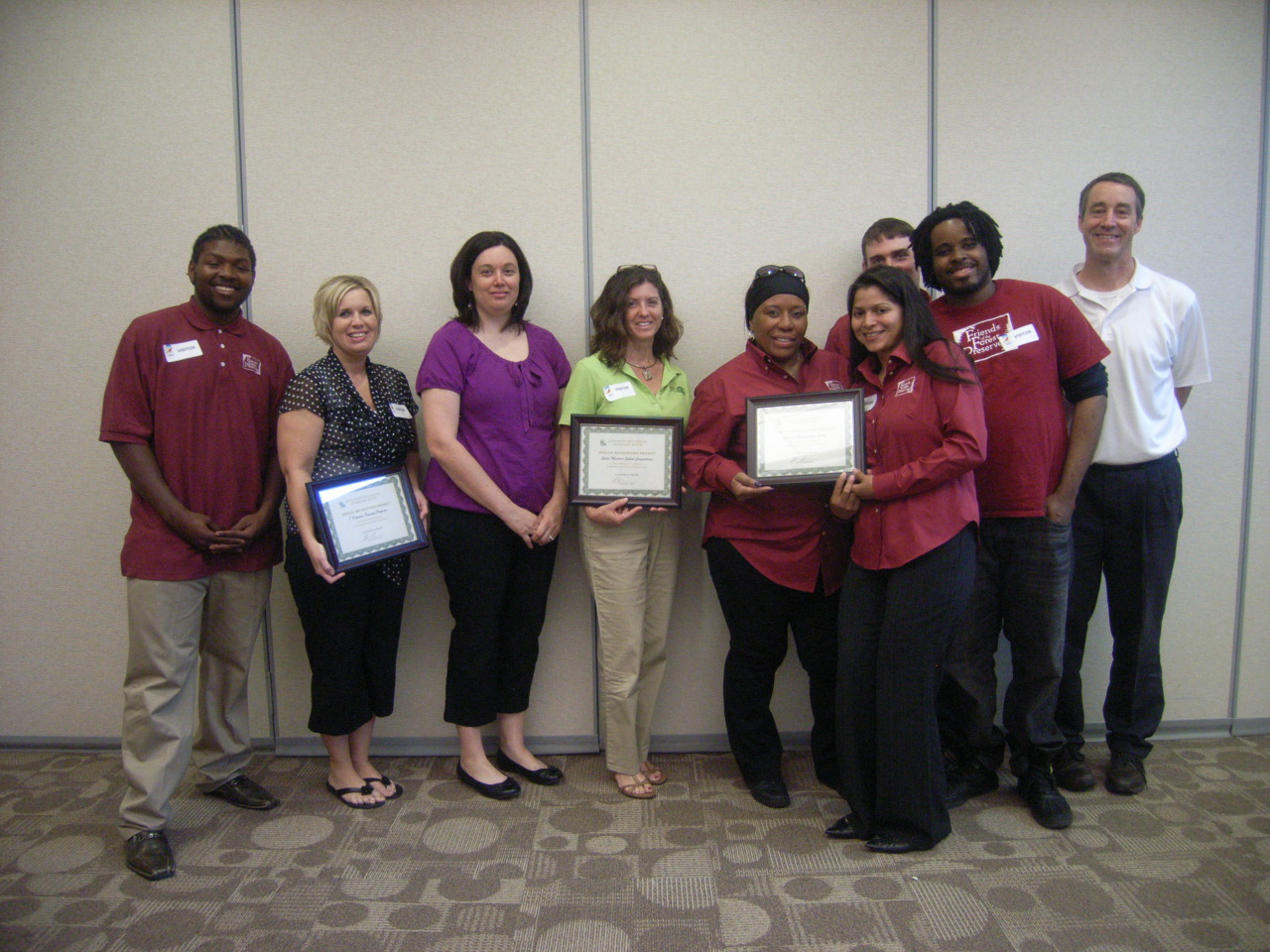
| Representatives from the four projects receiving special recognition received certificates during the ceremony |
Conservation@Home - The Conservation@Home project, administered by
Conserve Lake County, is receiving this recognition for the project’s
accomplishments in educating and assisting private landowners in Lake County on
invasive species identification and control.
The vast majority of Illinois’ natural lands are in private ownership
and these lands are crucial to conservation. Conserve Lake County’s approach to assisting
private landowners through Conservation@Home is an effective project to engage
and assist landowners in Northeast Illinois.
Garlic Mustard School Competitions - The Garlic Mustard School
Competitions project, administered by Green Earth Inc., is receiving this
recognition for the project’s accomplishments in educating school children
within the Carbondale area about the threat of invasive species and providing a
venue for these children to contribute to local conservation. Through the
competition school children learn about invasive species from presentations by
biologists visiting their schools and visits to local Green Earth Property to
help control Garlic Mustard and compete with other classes to see which group
can pull the most.
"Green Earth provides valuable
opportunities for the citizens of Carbondale to interact with and learn about
nature. One of Green Earth’s most influential and fun educational events is
the annual Garlic Mustard Challenge program for local school groups,” says
Karla Gage, coordinator of the River to River Cooperative Weed Management
Area, “Children are our future land stewards, and it is particularly
important for them to be able to identify invasive species and understand why
invasives are harmful. The site where the event is held has a rich
diversity of spring ephemeral native plants, further helping to show the
children what plants do and do not belong in our native ecosystem – and the
potential consequences of invasive species."
1st Detector’s Training Program -
The 1st Detector’s Training Program, administered by the
University of Illinois and the Illinois CAPS program, is receiving this
recognition for their accomplishments in statewide education for forest
invasive species and development of an early detection program for new forest
invaders. Early detection of new
invasive species allows for natural resource managers to respond quickly and
control, contain, or eradicate new populations before they are widespread and
damaging. “The 1st Detector’s
Training Program is one of the most effective statewide Early Detection
Programs I’ve seen implemented” says Chris Evans, “This project was much needed
and positions Illinois to be better able to address any new forest invasives
that may sneak into our state.”
Calumet
Conservation Corps - The Calumet Conservation Corps project, administered
by the Friends of the Forest Preserves, is receiving this recognition because
of the project’s efforts to restore natural areas in the Calumet region: Eggers
Woods, Beaubien Woods, Dolton Prairie, and Kickapoo. The Corps consists of five members from
diverse communities in Calumet : Brian Mann, Brenda Elmore, Tyrone Mudro,
Jessica Rosenthal, and Xochitl Lopez.
They have controlled 60 acres of woody invasive plants and detected and
eradicated another 228 acres of invasive plants that are new to the Chicago region.
“We’d like to thank the program for providing communities
in the Calumet region with new opportunities to spend time outdoors as well as
giving native plants and animals a second chance to use their native
habitats.”, says Cathy McGlynn.
For more information on invasive species in Illinois or
Illinois Invasive Species Awareness Month, be sure to check out the ISAM
website at
www.illinoisinvasives.org.